
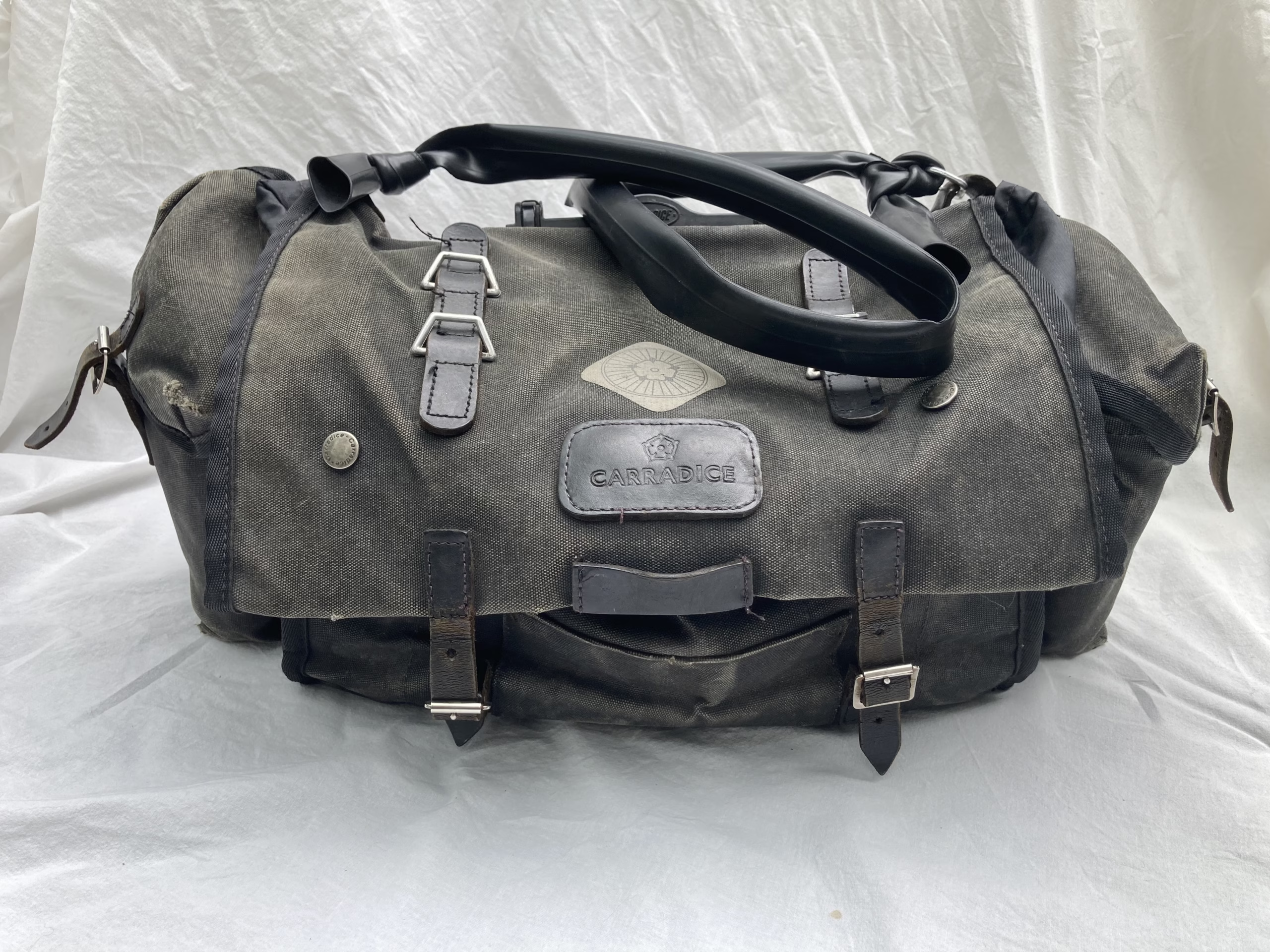
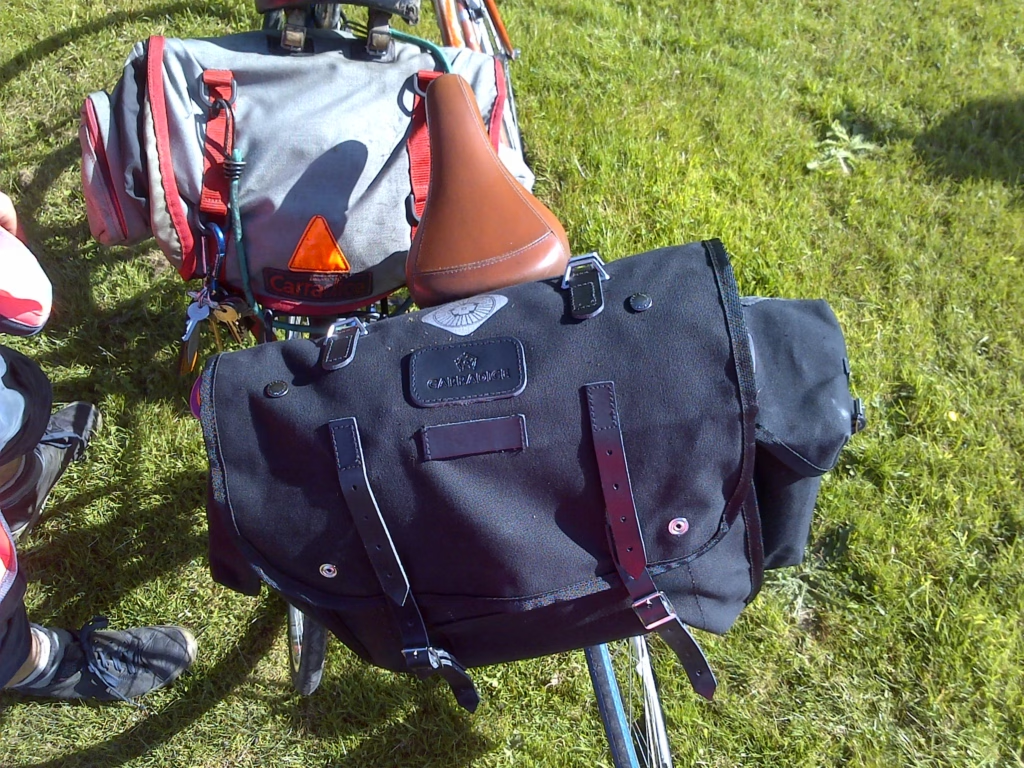
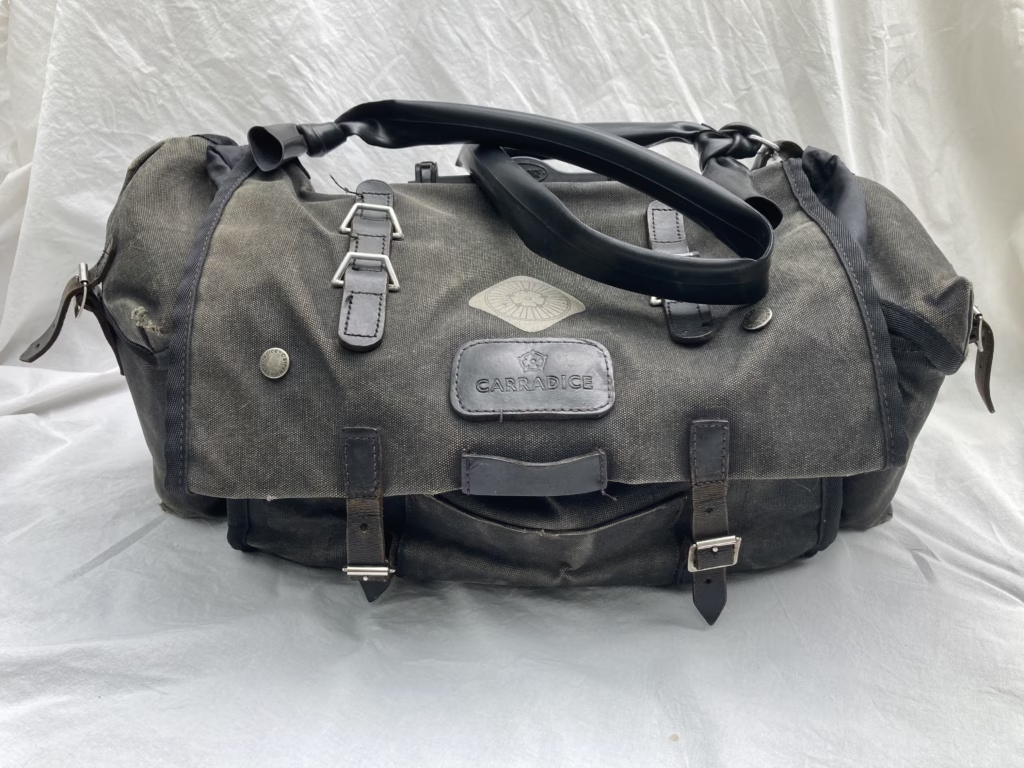
Back in 2012 or 2013 I bought my first — and so far only — Carradice saddlebag, the Camper Longflap. Made in Nelson, Lancashire by the traditional UK-based bike bag company Carradice, the Camper Longflap has a long, folding cover flap that increases storage and runs bigger than the 9L Barley and 15L Nelson. I’ve had my Carradice for over ten years (approaching fifteen!) with plenty of adventure and everyday jaunts along the way, and the bag has suited me well through all of it. I’ll share here a brief history of my last decade with my Carradice, some of its features, the wear it has undergone and how I’ve kept it in usable condition.
The legend of Camper
Carradice bags have existed since 1932. The Camper model of saddlebags has existed since the 1940s1 and the Camper longflap at least since the 1950s2. Similar to traditional British-style saddlebags like Brooks and Karrimor, Carradice and the Camper (along with the Nelson and Barley) are saddlebags that sit laterally behind the saddle and are made of cotton duck (a type of canvas material) that provides waterproofing and durability. TheEverydayCyclist has already written on the features and details of the Camper Longflap, which you can read more about here, and our very own Blög has a general overview article of Carradice saddlebags here (in Finnish).
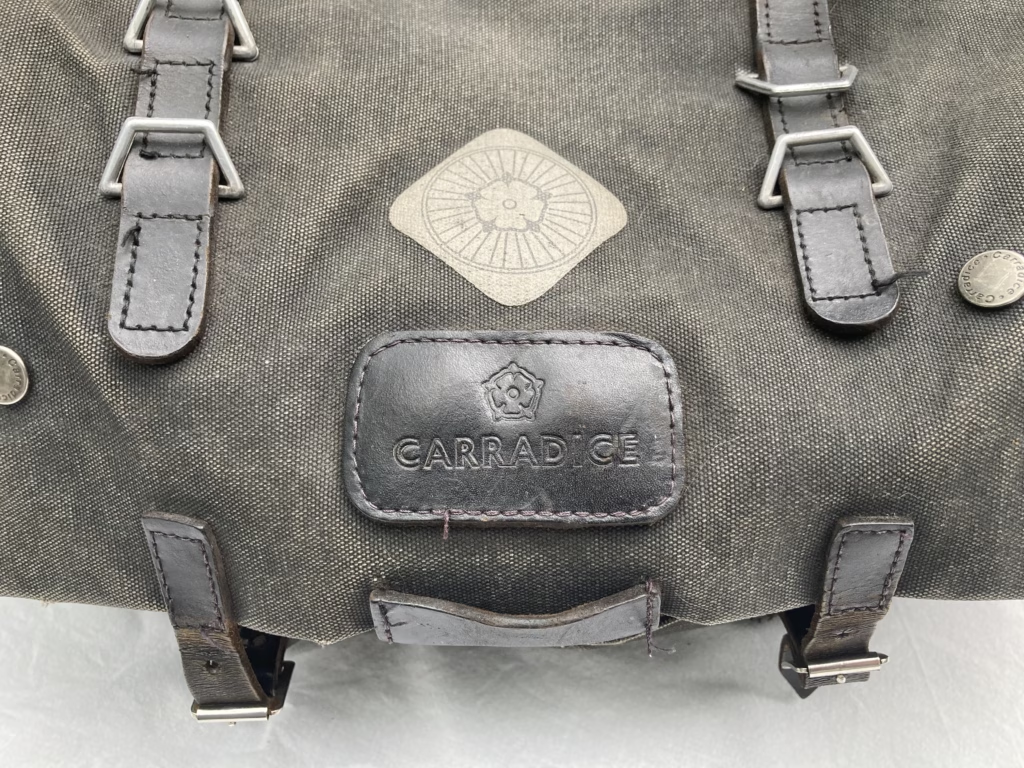
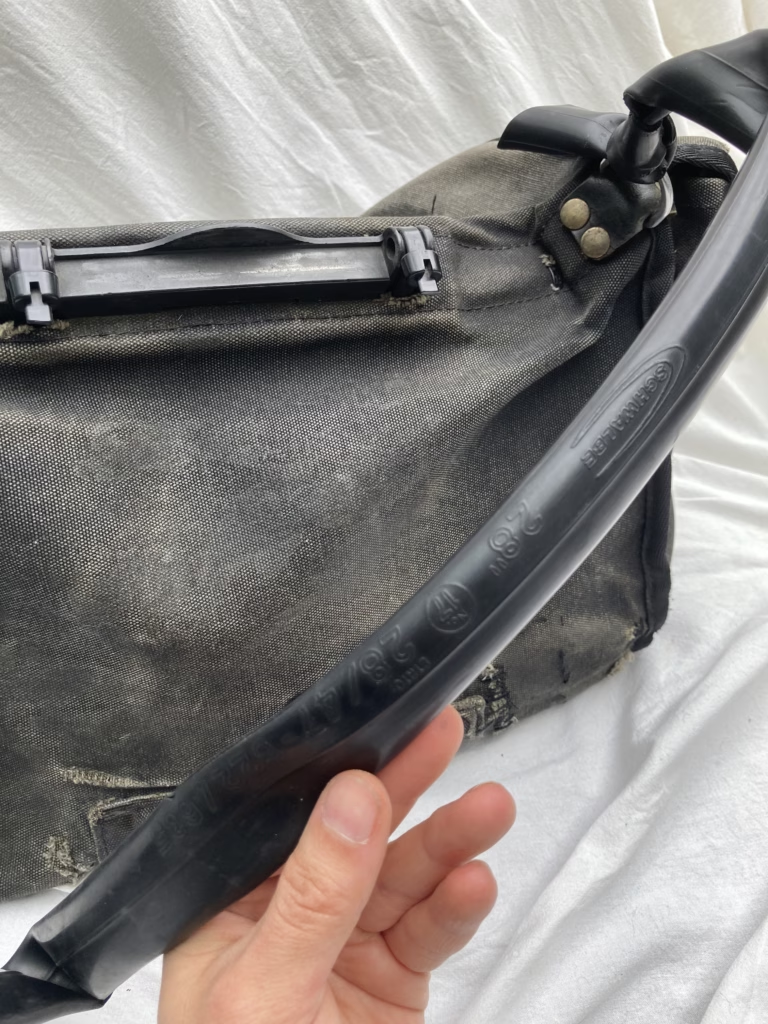
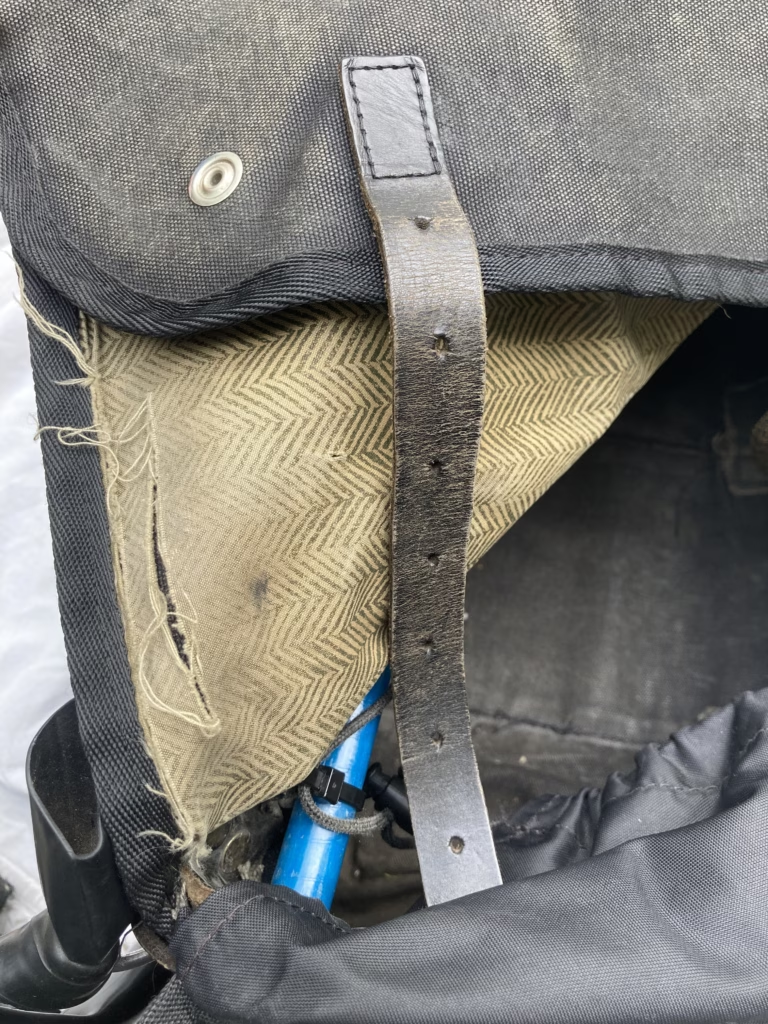
I acquired my Camper Longflap (referred to as “Camper” for the rest of the post) when I was living in London and working as a bike mechanic and instructor at the London Bike Kitchen (LBK). I was already into bike camping and longer bike rides, and was at the time getting into bike bags beyond standard panniers like Ortlieb, which felt a bit bulky and oversized for small weekend excursions. Jen and Petor had made a custom order for LBK from Carradice and a big cardboard box full of saddlebags had arrived at the shop. Jen was the longtime owner of LBK and Petor is currently organises Bespoked. I remember that the bag came with no strap despite having handles for one, so I just dug a random inner tube out of the tube bin and attached that to my bag; that tube is still there (see Image 5 and the ‘wear and tear’ section)! I also recall feeling touched that the tag on the inside of each bag says who made it in the artisan’s own handwriting with biro pen, clearly showing a bit of pride that this bag was made by hand and in the UK. My bag’s tag name is nowadays rubbed completely away but I recall that Janet made it <3. There are some unique features on the bag because of Jen and Petor’s custom ordering. For example, the leather straps are black (the black bags are typically paired with white straps) and thicker (Petor noted that the regular straps crack and fall apart more easily), and the interior is lined with a custom design cotton fabric (see Image 5).
Oh, the places we’ve been
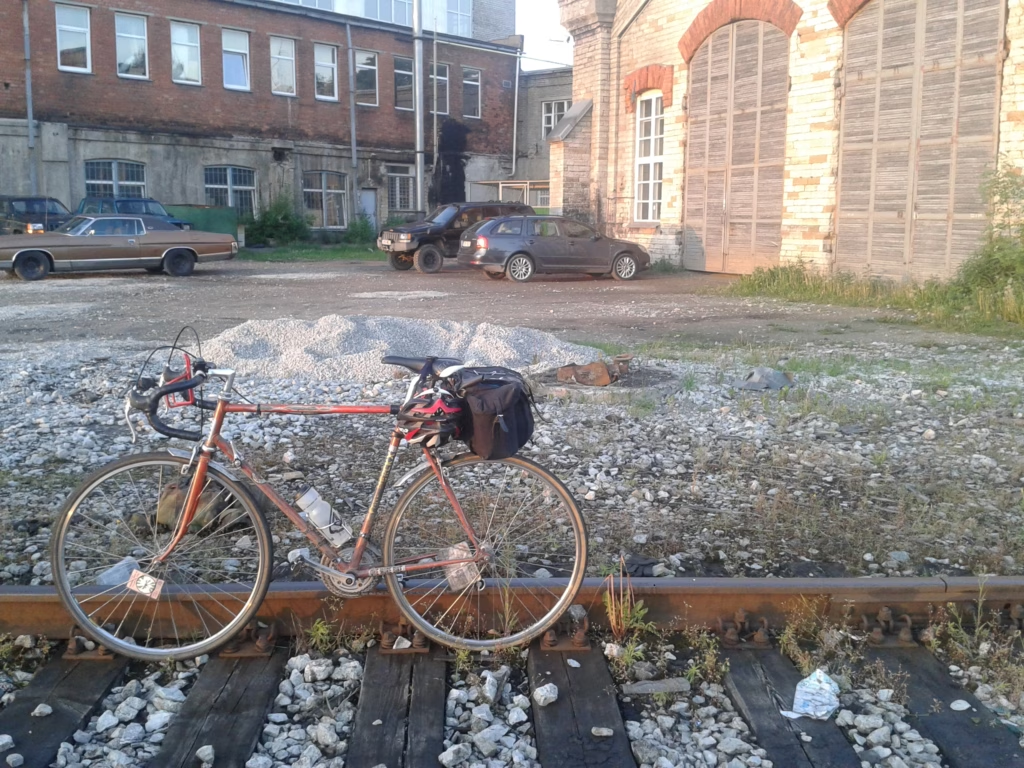
Getting my Camper coincided with my introduction to cycle camping. Maybe it was a mix of both coincidence and design: the bag can hold quite a bit, and at the beginning of my beyond-the-city excursions it held my tent, sleeping bag, some food, clothes, and toiletries. I usually had a handlebar bag (a boxy German-type one Klikfixed to the handlebar) that would hold additional food and clothing. For summer touring for 2-3 days it was ideal. Along with the Camper, the first road bike that I bought (second hand, at Look Mum No Hands bike jumble!) and built (with the help of another friend, Seb; I was in my early days of bicycle mechanicing and maintenance, not just in cycle camping and touring) was a fake Eddy Merckx (likely an Alan, a small frame builder out of Croydon (not to be confused with the Italian one!). So my first forays into cycle camping and long(er) distance cycling were together with Eddy and the Camper as my companions, as I would often go alone.
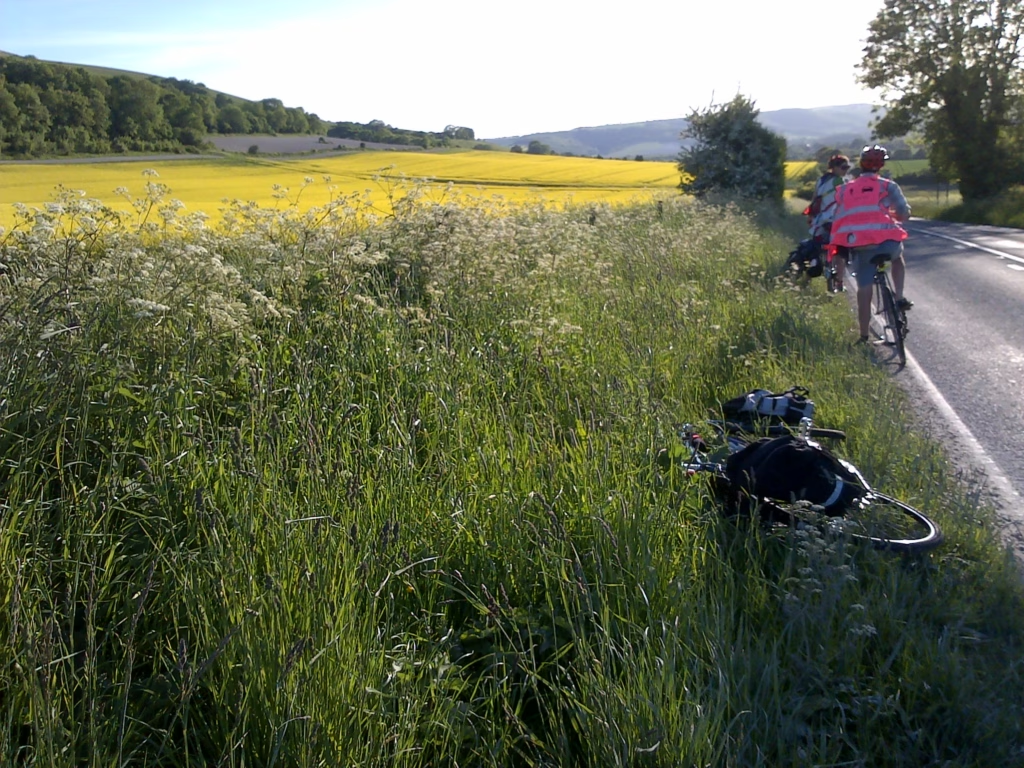
We’ve been to many places in southern England, such as London, Kent, the Surreys, and Oxfordshire. Some highlights have been London-to-Brighton and going through the south Downs.
We’ve also been around the Netherlands, western Germany, Belgium, and northern France. For example, Nijmegen-Amsterdam; Utrecht-Melle/Ösnabruck/somewhere there. We once did Nijmegen to Hoek van Holland in about 11 hours, and then Dover to London (Elephant and Castle) the next day in I don’t know how many hours (I had no money and lost my paper map so just winged it through north Kent). Another time, I spent the night wild camping on some small hill in the bush in Mechelen because a friend who lived in Brussels was unable to host me. Luckily my tent and sleeping bag were tidily packed in the Camper.
My first trip to Sweden and Finland included riding from Turku to Helsinki, then Helsinki to Loviisa. I remember my first night in Finland – near Inkoo I found a wonderfully thick, mattress-like layer of moss to sleep on, however there were also plenty of moose droppings. I had to ring a Finnish friend to double check whether I should be concerned or not of being attacked by moose out camping! Turns out no, not at all. Many trips in and around Helsinki/Espoo/Sipoo and a couple in Estonia followed after that, though I never found another campsite again with so many moose droppings as that first night in Finland. Eventually I acquired more bikes than just Eddy, so I started using Camper on most of them, especially the ones that I used almost daily and had to haul things with. So while my bicycles change, the Camper is forever versatile and in use.
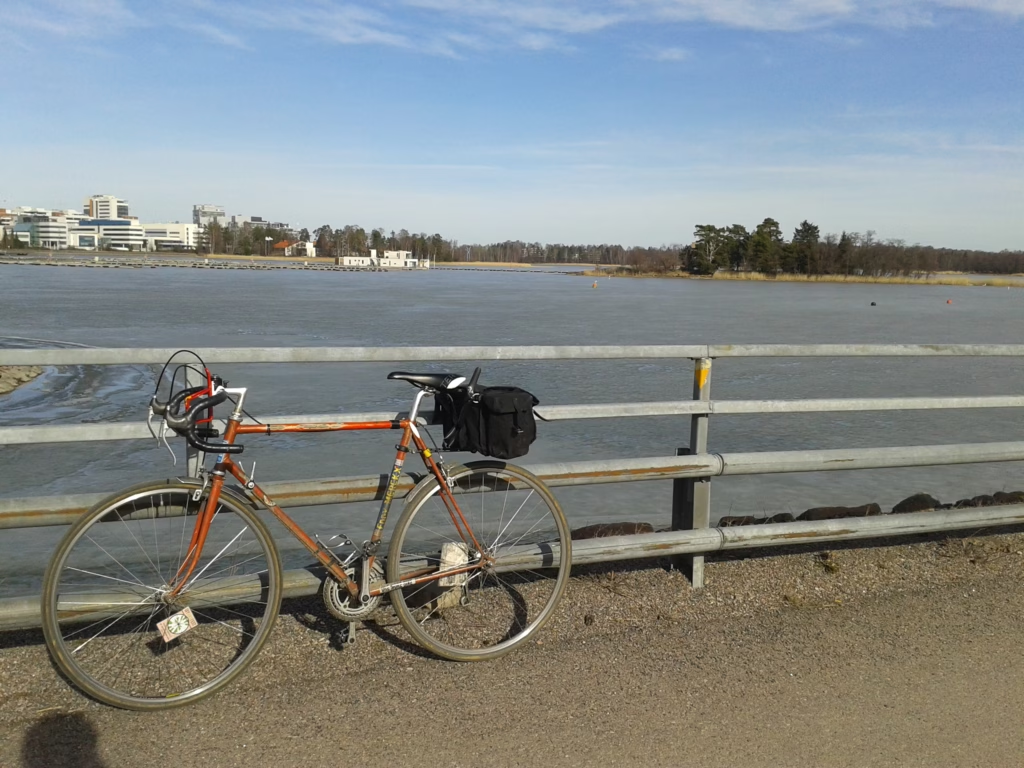
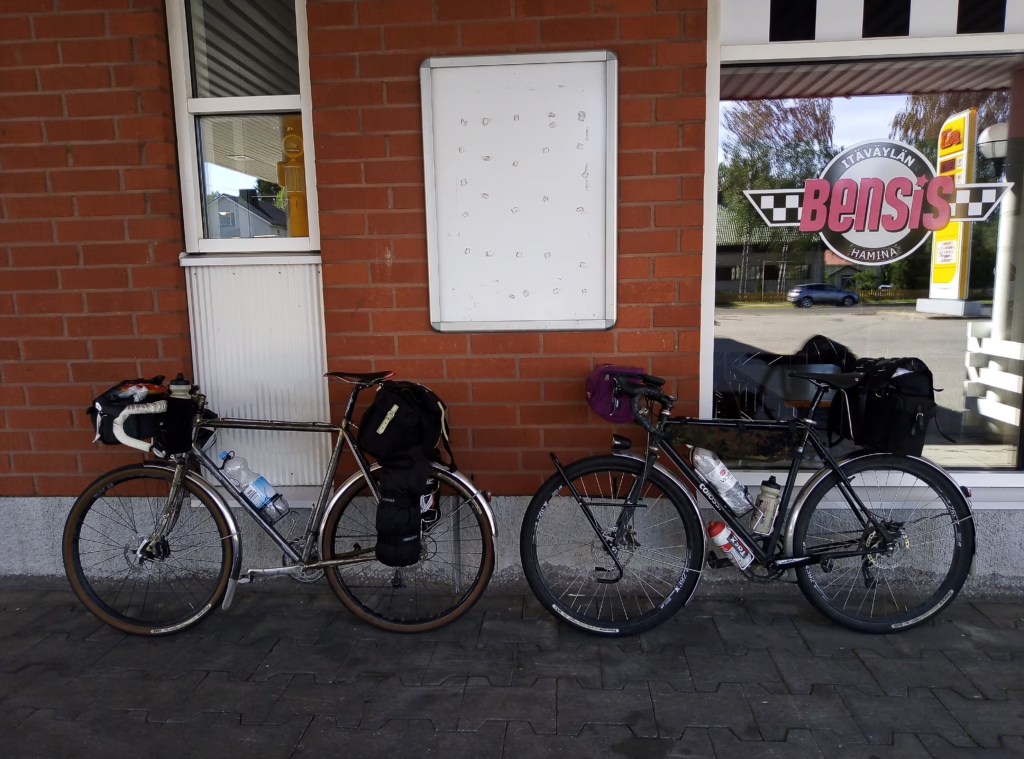
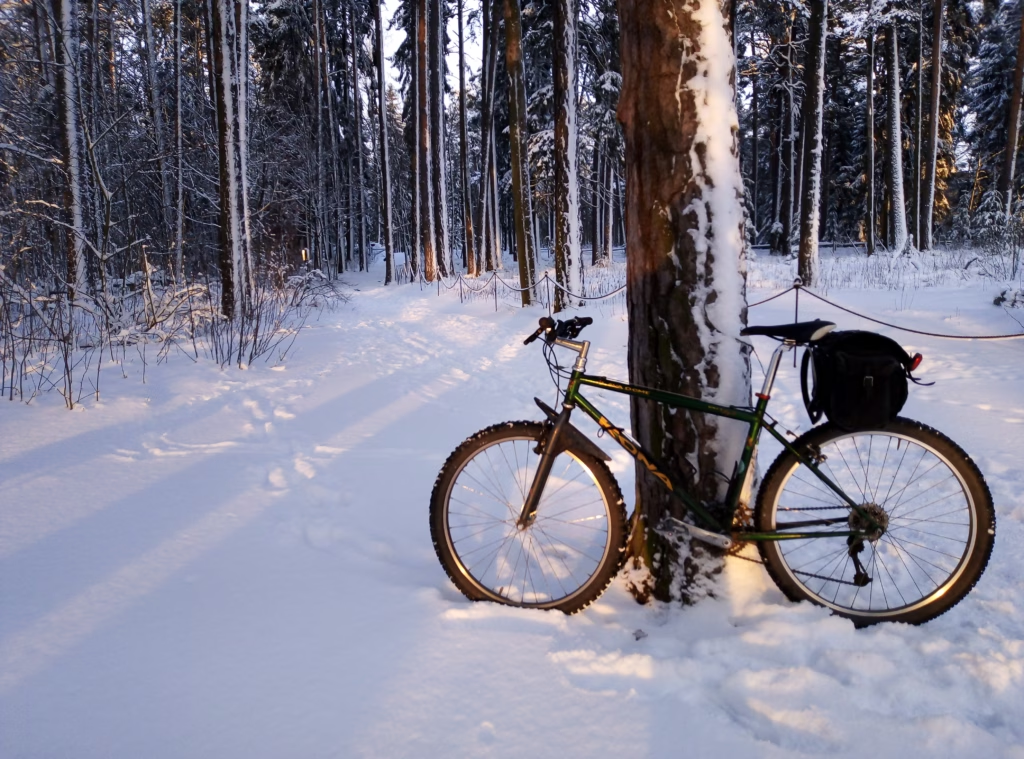
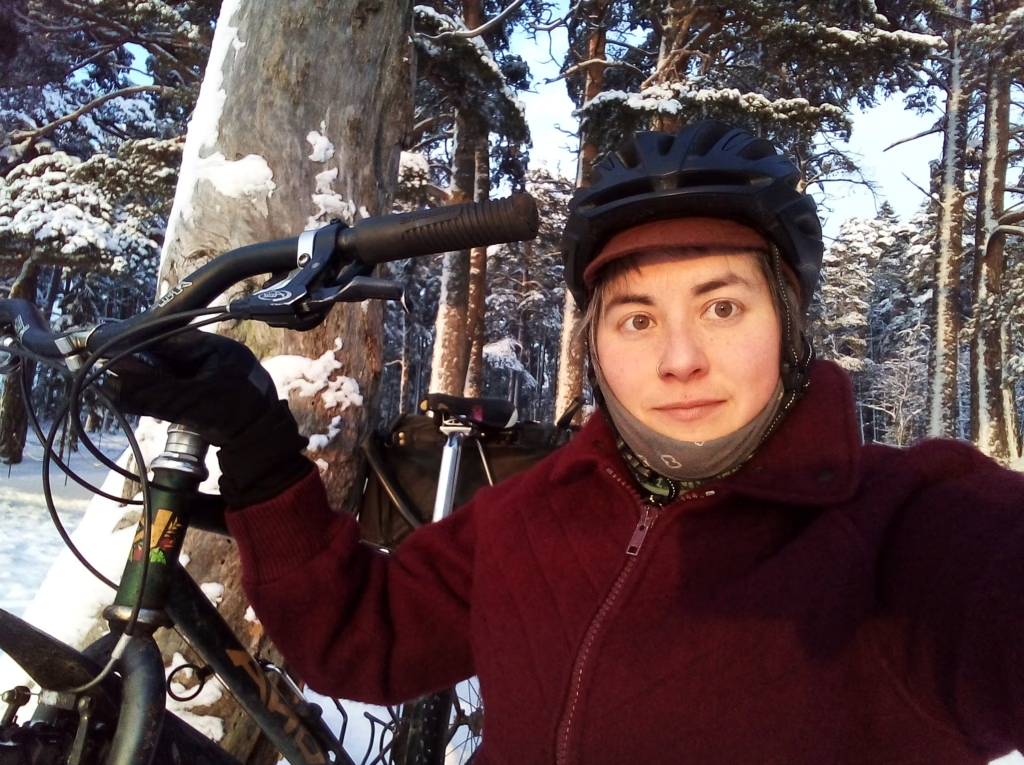
The Camper has also been a trusty mainstay of my daily commute to work (in the past decade longest commute: 50km roundtrip; shortest commute: 10km roundtrip). It is typically paired with my ‘four seasons’ gravel commuter Colossi, my mountain bike that is primarily my deep winter bike, or Eddy (now redone as a sweep-back bar city bike), The Camper has withstood all manner of weather: sun, showers, lots of rain, snow, etc. It can hold quite a bit of stuff and its low maintenance coupled with its ability to withstand all kinds of weather while holding my groceries, bike parts, and books is definitely part of what makes my year-round riding possible.
Wear and tear
I find Carradice bags to be generally low maintenance. The main thing is to wax them — this can be done with a type of beeswax or other waterproof wax that you warm up to body temperature to loosen and then spread on the bag with a cloth, finished off with blow drying to let the warm wax permeate further into the bag. I personally wax my Camper about once a year (or try to), typically in the autumn (or if I am actively using it a lot on longer trips, then autumn and then spring (i.e., before the snow and before the rain. That is, before the off season and before the on season).
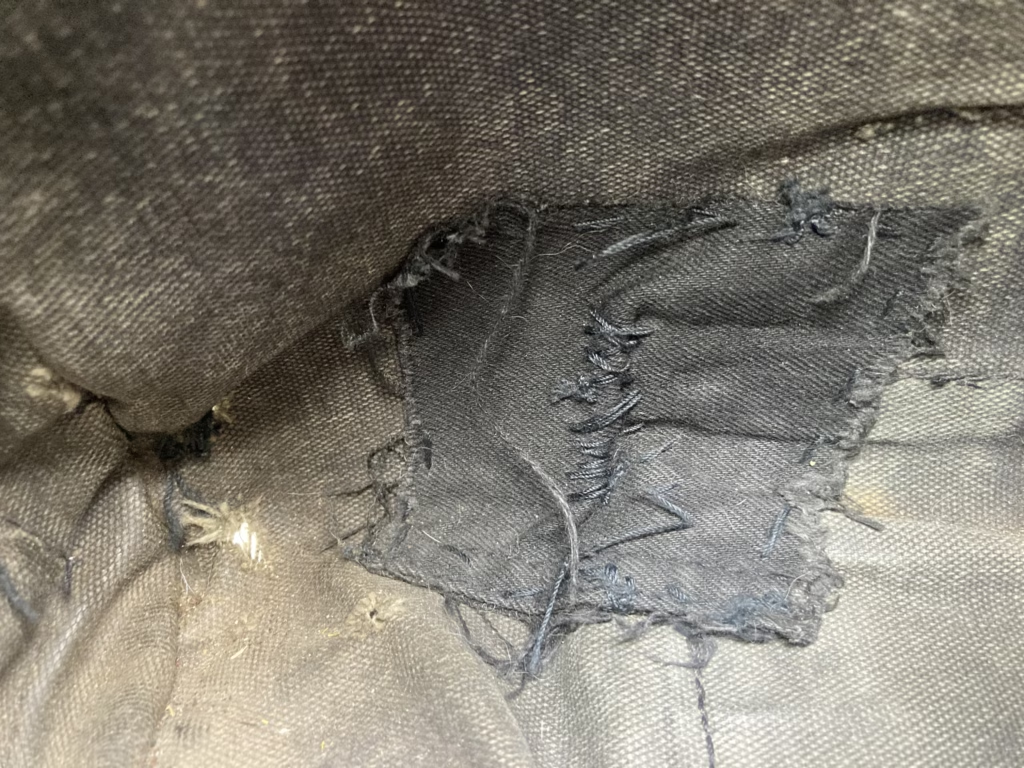
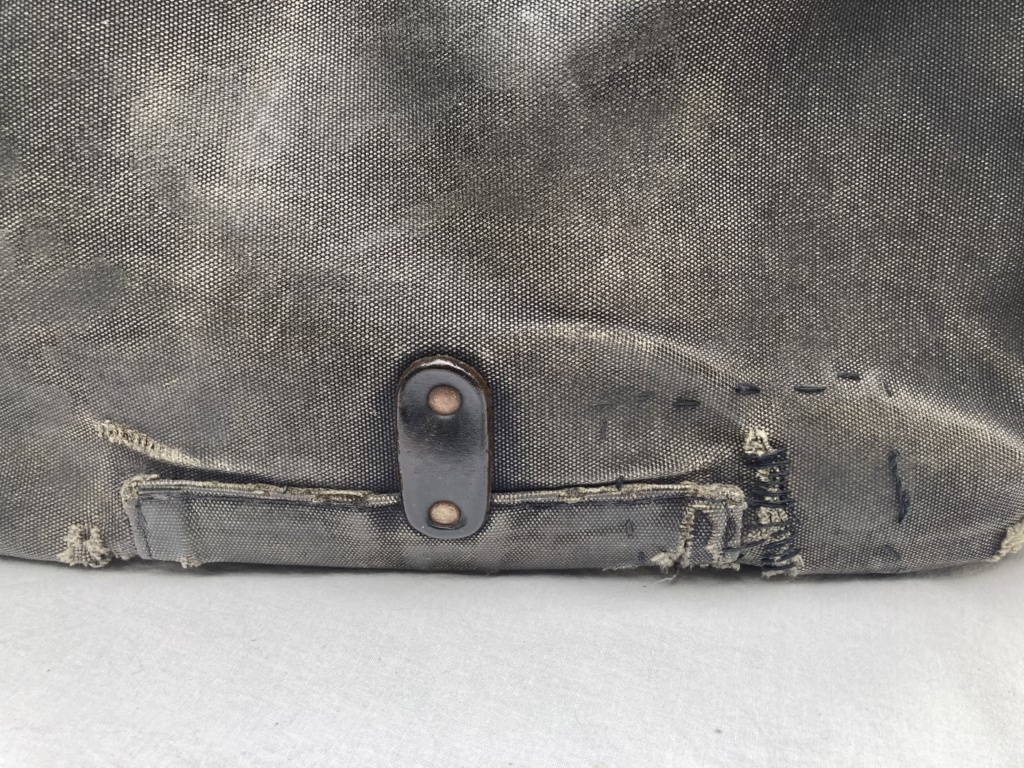
About five years ago my Camper needed a spate of repairs. I think this was due to an object in the bag rubbing/vibrating just enough times in a partially empty bag to wear out the cotton canvas. I can’t completely remember, but I suspect it was either the bike lock and/or bike pump, as I typically keep them either at the bottom of the bag and/or in a certain part of the bag. Some holes developed at the bottom of the bag, but I repaired them with patches sourced from some old pairs of jeans. I also had to resew some stitches in the side pockets, which had gotten loose. Since cotton duck is quite thick, I highly recommend one to use a heavy duty sewing needle and string on these bag repairs!
Otherwise, about two years in I replaced the wooden dowel rod, which comes with the bag: it had snapped (perhaps I overloaded the bag). I replaced it with a piece of modern ski pole (i.e., fiberglass; plentiful in Finland) and it has been fine since. In the last year or so I have started to notice some wear and tear on the custom cotton lining on the inner left side (where I typically open and close the bag). I really love the inner lining design, and it too was a custom feature of the bag. I think I won’t replace this, at least anytime soon, and just enjoy the wornness of it. I have also noticed that another hole is developing at the bottom of the bag. Again, from either the pump or bike lock, so I will include this in my yearly winter mending and waxing of the bag.
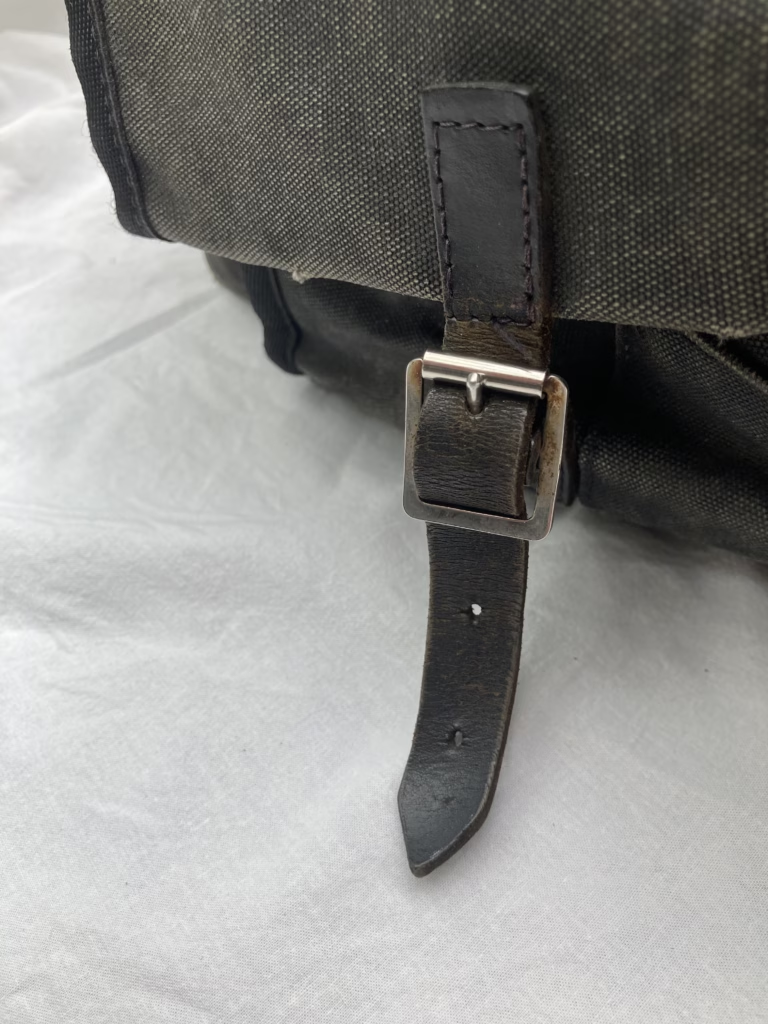
The leather has been exceptionally good, with little to no breakage. I can’t remember the last time I treated the leather, but I should do so soon as there are some cracks forming on one side strap. Notably, the inner tube strap remains ‘original’ and has never been replaced. It is smoothed down to a nice handfeel.
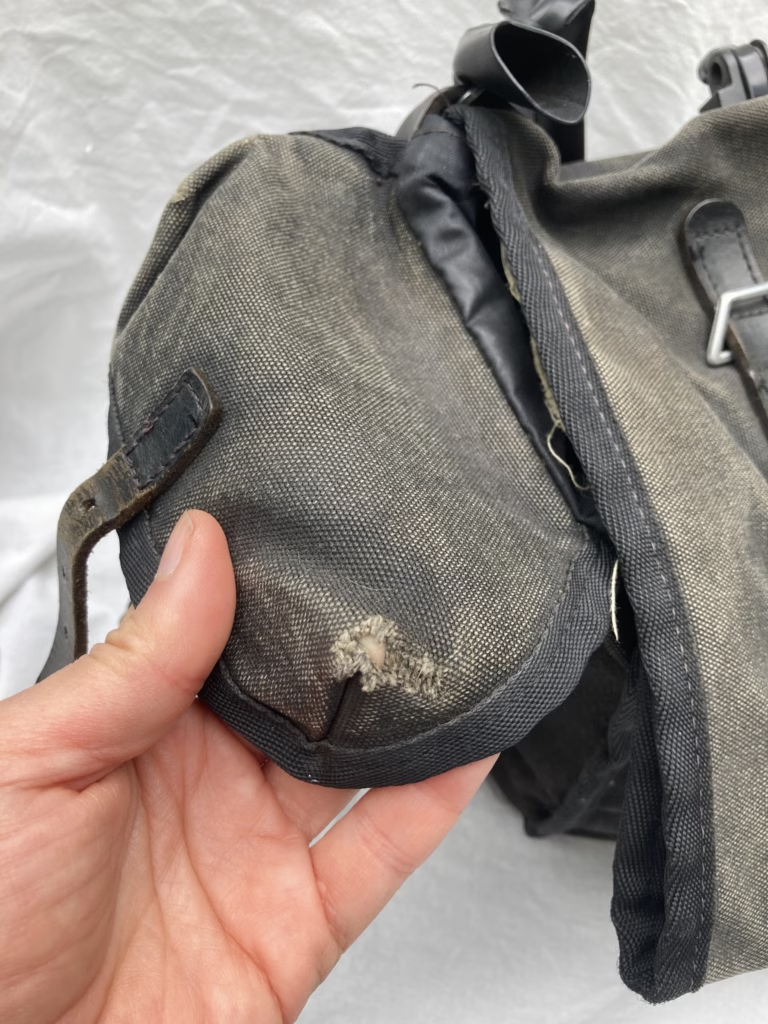
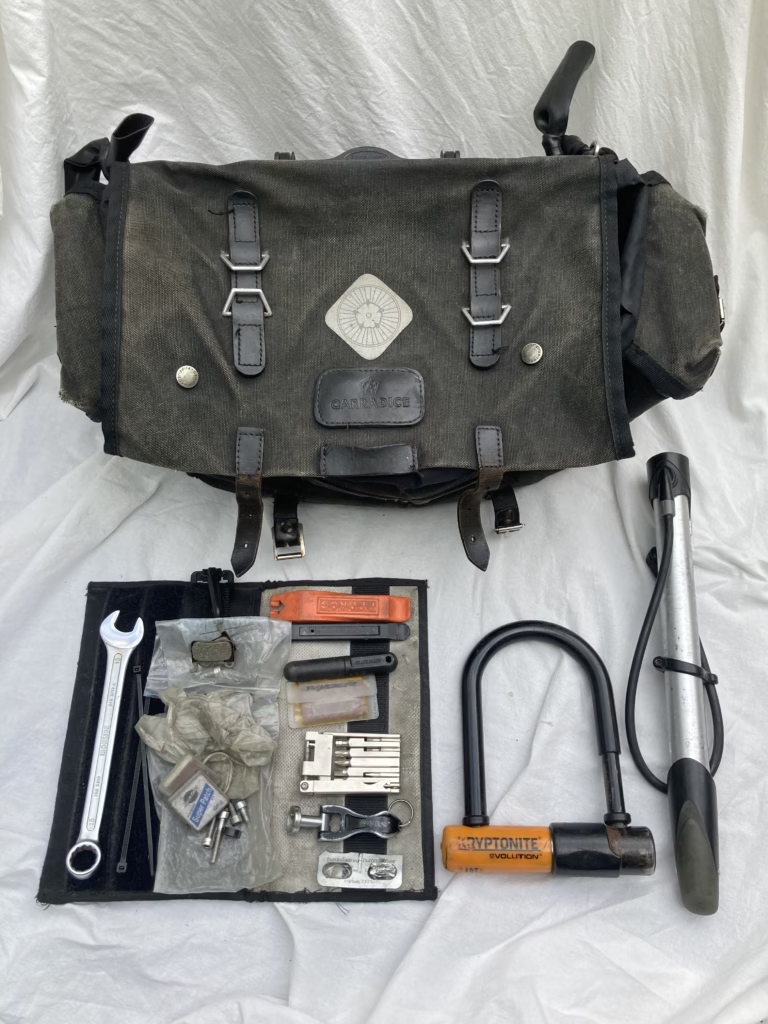
This bag has a history, and it shows. Fabric rubbed smooth, worn down, or faded. Yet this mass of canvas and stitches still has plenty of miles left. Where there is wear, there are signs of care: restitched edges and patched-over holes. The desire to see a bicycle product like a canvas saddlebag through to the end is about pushing that item to its limits, in letting it build up your memories of fun outings and adventures, as well as appreciating its steadfastness in the everyday mundane rides like going to work and to the shop. This bag has become full of layers of wear and care, and therefore memory. I look forward to another decade of Camper!
Lish Ng