
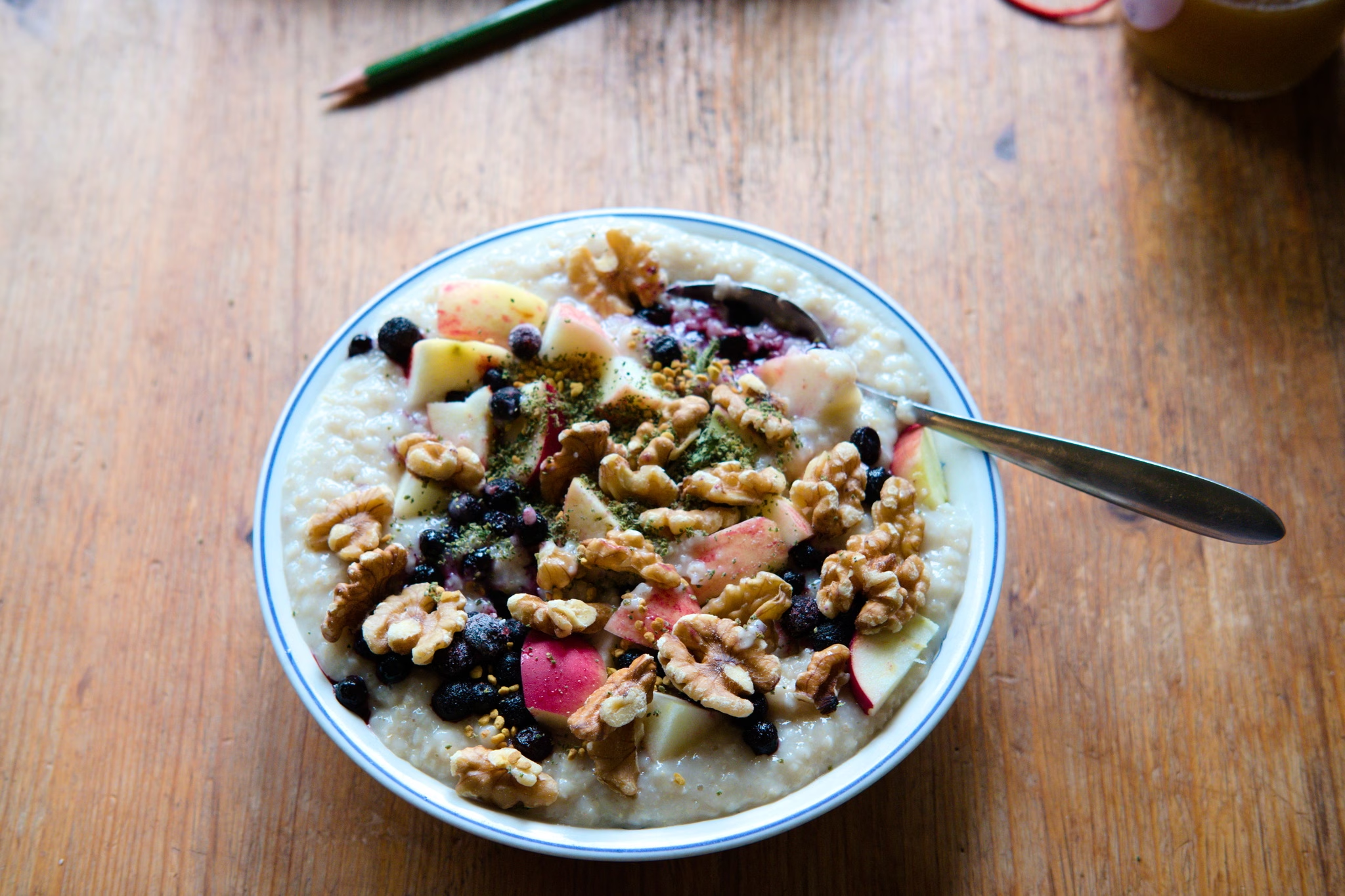
Before I get to my own high-flying theories, I want to start off with a down-to-earth piece of an interview I read recently, of the famous ultra runner and potato farmer, Australian Cliff Young.
How has your diet affected your running ?
I think I have gone better on it. Do you know why? We use to have an old draught horse when I was a kid that wouldn’t work too good at all. My father said ”Get them off the grass and put them on oats”. After a day or two they would bolt so I said ”By Gees, there must be something in those oats. They were all about 20 years old. Before you would be hitting them with the reins all the time, then after a couple of feeds of oats, you would be flat out holding them back. They wouldn’t stop. So I woke up to it straight away. There is something in those oats. I’ll stick to the oats. That’s why I eat rolled oats and I think it helps”. When I used to eat meat religiously every day, I don’t think I could perform as well as I can now on a vegetarian diet. I am better now.
You can read the whole interview here (link). Let’s get cooking then.
In Finnish there are two sayings about what crazy people like. “Liking something like a crazy person likes porridge” and “Liking like a crazy person likes a bicycle”. Well I have already admitted, understood and accepted my position amongst the people, and don’t mind this folk wisdom at all. Only the mad are sane in this mad world, they also say.
For a change this blog is not about the bicycle madness, but about porridge. That ancient foodstuff, simple, healthy and cheap, deserving of more praise than it sees now.
The history of porridge, as far as I’ve understood it, goes all the way back to when humans first found wild grains and slowly started cultivating them. Porridge, maybe along with beer, could be said to be the fuel of genesis of all modern civilization. The civilization-critiqueist wolf, or should I say deer, as wolves probably wouldn’t like porridge, that lives inside me, having been introduced to anarcho-primitivism at a tender age, thus kindly suggests maybe porridge, or beer as the more evident suspect, is the reason for the doomed state of humankind. Maybe we should have let fire and grains be. But here we are now, let’s deal with it. Look for a way forward, not back. Including now in this text which has right away gotten lost in the weeds.
There is definitely an archaic feel and look to porridge. It’s very being emanates a free, even chaotic level of being, being all mushed up together with no clear structure. Maybe if one studied it very closely you could see the bigger and smaller particles swimming in the foams and liquids, and would draw some analogies to the cosmos itself. As above, so below.
I think this total free-formness of porridge is also what puts many people off, because the reality is, even though its health benefits are touted in newspaper articles and accepted by mainstream health professionals, many people think that porridge is weird and they decide not to like it. Maybe their civilized eyes and mouths cannot stand the radical non-order that porridge is. I could bet that in the finer parts of society, or amongst any people who aspire to be part of it, porridge is frowned upon. Why porridge still holds its place in Finland, would possibly be due to the nation’s backwardness, which I don’t mean in a bad way. Finnish people who have only in the last few centuries moved out of their earth pits and smoke lodges still hold on to some of the naive and direct habits of ancient cultures, not yet bulldozed by globalization and (high) society.
Porridge can thus be seen as a more simple way of living, with no pretentiousness, no added layers, no construction of artificial order. It is the easiest cooked food, both in making and digesting. It is bland, and can be taken to any direction. It is the beginning. It is pure potential. And it takes refinement, or possibly untainted naïvéte, to appreciate blandness, to see the possibilities as positive instead of seeing the lack of attributes as negative. The same can be said about many other things, of edible ones tofu comes to mind, another food of the gods on earth that we are.
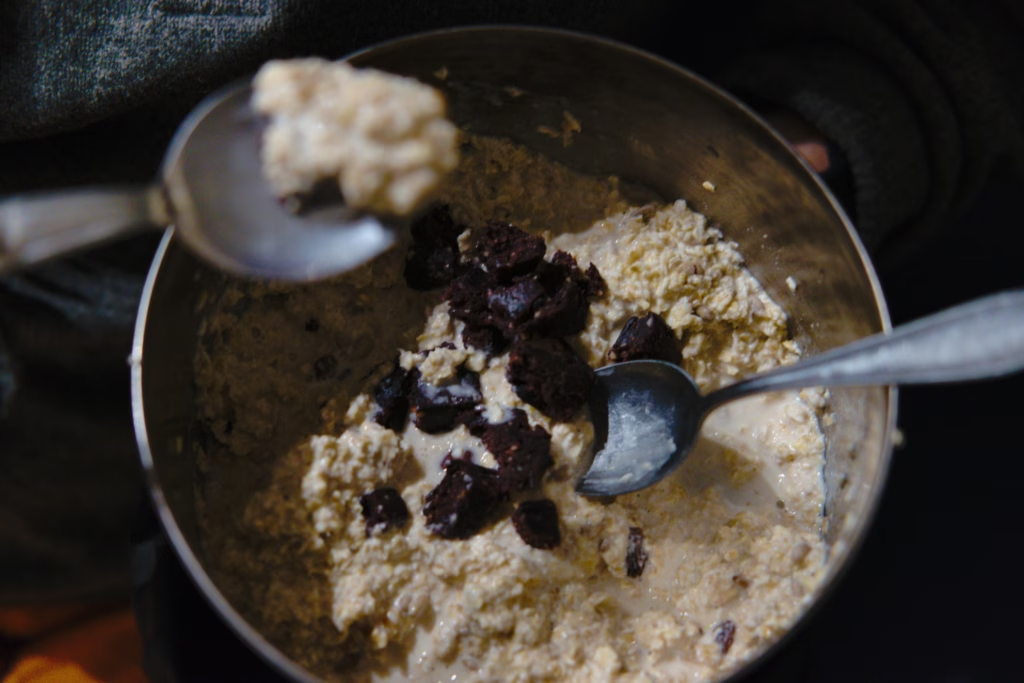
Overnight oats were enjoyed on the Amsterdam-Newcastle ferry. Sometimes one simply doesn’t have much… I can’t even tell what that is on top.
The morning porridge especially can then be seen as the breakfast of genius, as it leaves every possibility open, not guiding us to any certain direction, taking us to the beginning of anything. What you do in the morning will affect your whole day, and will set its course so to speak. If you wish to have original thoughts, you should not take in too many thoughts from other people. To read the news first thing in the morning, a catastrophe! But porridge, it leaves the possibilities endless, while of course leaving space for creativity, taking us to the next chapter, the toppings.
Porridge is plain, but toppings vary. The following guidelines are for oatmeal specifically, it being my porridge of choice basically always when it is available. The ascetic will eat it with salt and maybe a drop of butter or margarine, a diced apple perhaps, while the maximalist will drown theirs in strawberries, raspberries, sunflower seeds, honey, coconut oil, peanut butter, slice of fried tofu in sweet soy sauce and maybe a sprig of mint and a pickled cherry to finish it off. I personally would recommend moderation, but that is just my taste. Around 2-4 different toppings is where it’s at for me, while the mixtures can and they do vary over time.
Classic recipes for me include ’blueberries + honey’, ‘apple slices, raisins and peanut butter’, ‘lingonberries, honey and oat milk and crushed linseeds’. And so on. Lately I have experimented with bee pollen as a dietary supplement on top of it all, and seems it hasn’t done any harm. The variation of toppings seems to change and evolve naturally, changing every few weeks or months with stable periods in between, which is maybe a sign of what the body is lacking and needing at the time. Changing toppings every day might work for some, but I’d recommend caution to not become too mentally and physically disrupted.
Savoury porridges are a different feast, to which I admit I haven’t developed the taste for. This is surely an opportunity for my spiritual growth. I could imagine eating some with coconut oil and salty nuts for one, or maybe with some greens and vegan or ordinary cheese. I plan to ascend there one day.
Porridge can of course be made with many other grains or maybe even with potatoes and such starchy things. Every now and then I run out of oats and will resort to making a substitute rye gruel out of rye flour, which works well with lingonberries and oat milk.
Evening porridge is another worthy concept in addition to the more common morning one. Whereas first in the morning porridge leaves all doors open, in the evening the safe and calm and soft warmth of a creamy milky porridge can be seriously comforting. I tend to choose more neutral, grounding earthy tones for the toppings in this case, like raisins only and the porridge itself cooked with oat milk, perhaps adding a pinch of cinnamon or cardamom.
The many varieties of oat meal form a chapter of their own. I remember being shocked when visiting the Bay Area in California some years ago, as the only thing I could find in that land of plenty was steel cut oats, which would not soften by cooking no matter how long you went at it. I do not like my porridge chewy. For me, the softer and foamier, the better the porridge. I will admit that the standard Finnish pre-steamed oats that I almost always eat are not the true connoisseur’s choice, but a modern convenience with the cost of lost flavor and lesser health benefits, like most modern conveniences are. The even more convenient instant oats, “pikapuuro,” I generally stay away from. The best porridge is made from non-processed non-steamed oats. I have lately been experimenting with them again after a long break by the recommendation of my colleague and editor Petri. I am considering moving to completely or mainly using the non-steamed variety, which I thought takes longer to cook, but actually it doesn’t.
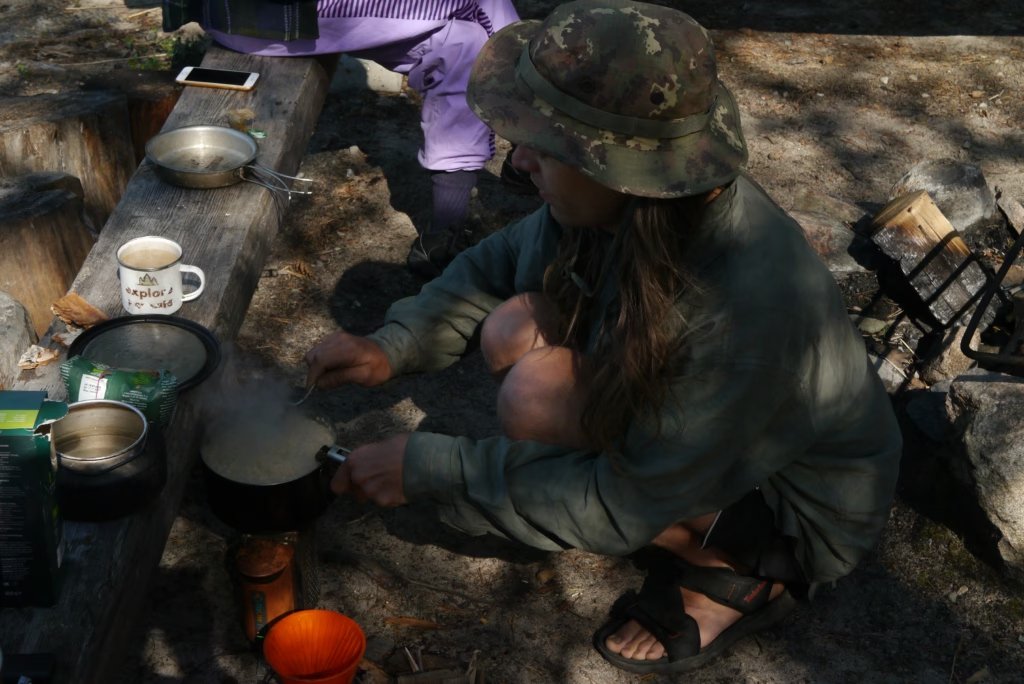
Tarde showing how its done.
This brings us to the cooking part. Porridge’s easygoing nature makes it seem like you can cook it any way you want, but I disagree. My friends already know that I’m particular when it comes to cooking oatmeal, and they are not always happy about it, the process taking such a long time and generally me being so fussy about it. On the other hand, I have had many people compliment porridge that I’ve cooked. Maybe someone has even been converted to the porridge team through this kind of positive experience. And to be very honest, having tried a variety of porridges cooked by different people, I’m not surprised not everyone likes it after trying some.
One wouldn’t cook rice just whichever way, no one likes wet and mushy rice, or rice that is hard and dry, it needs to be just right, and just like oatmeal, cooking it properly is surprisingly difficult for the uninitiated! And the instructions stated on the porridge packages are not to my taste at all, producing an all too chewy and dry porridge.
But after you have found out what you like and follow what you have learned, it becomes second nature. Next is my proposal:
How to cook either the fancier non-steamed or the more normal Finnish-style steamed oat flakes, “kaurahiutaleet” à la Aki:
Ingredients: water, salt, oatmeal
Preparation time: around 20 minutes(!)
For a large portion for one person I use 1,5dl of oatmeal and ~7 dl of water when cooking the “normal” type, which is a lot more than the package recommends! For the non-steamed type I use about 5dl of water.
When starting out, it might seem that the porridge is all too watery, but you must have faith, it will condense with time.
The pot needs to be large enough to allow the porridge to foam a bit without spilling. About one quarter of the pot needs to be empty once you put the water in.
First, bring the water to a boil in the pot, this is important, as otherwise the oats will suck in the water before the concoction gets to boiling. Add salt now, otherwise thou shalt forget it. Turn the stove onto medium-high heat and add the oatmeal in a steady fashion to prevent clumping. Stir a little bit. Let porridge cook WITHOUT a lid for around 5-10 minutes, on a rolling boil. It should be like a quiet “fountain” of watery porridge. You can tell by the sound once the porridge starts to thicken, the bubbles become heavier and stickier and start to make themselves heard. This is the critical phase, if you forget it while you’re doing your morning chores, you will burn the porridge. You must react quickly and go stir the porridge. Then turn the stove onto low heat and put the lid on. Cook for another 5 minutes or so, stirring once or twice or every now and then. If it’s too watery, you can always cook it more.
Finally, stir once more, turn the stove off and let sit under the lid for another 5-20 minutes. The porridge will solidify and settle and “dry out” again a little more. At this point the pot can be forgotten, the only worry being that the porridge will cool down. Especially on cold days one should eat their porridge hot. Sometimes it’s so hot that a particular “porridge sweat” or puurohiki is achieved. Like master Vélocio says, the first sweating of the day is always an achievement of proper healthcare. Not to substitute the morning bicycle ride of course, but to complement it.
The final product should have a thick creamy consistency, even when made without (oat) milk. The porridge has generated its own oat slime which makes this creaminess come about. I believe the slime also holds part of the oat’s health generating powers, something about the water-soluble fibers and so on. It takes some time and it uses more heat energy, but the method described makes a wonderful, beautiful, velvety and tasty porridge.
Finally, to add a dash of cycle touring to garnish the article now that it is served, I have one last tip: that of overnight oats. Simply put, oat flakes soaked overnight. Less soaking will do though, an hour or so seems to work as well. I dont think this works with the non-steamed oat flakes, but I haven’t tried. I like to add some seeds, nuts and dried fruits like raisins into the soaking container. This preparation makes for a fresher, cool porridge that is ready without any hassle, especially handy if you know you will be in a hurry tomorrow morning. You might miss out on some of the slimy benefits of course.
What’s this to do with cycle touring? In my experience it works very well as a breakfast for those days when you want to get going quickly, and not dillydally about the camp for hours in the morning, which so easily tends to happen. The cold-soaked porridge is also much easier to scrub off the pot than cooked residue, again saving precious morning minutes. One could probably live off of this type of porridge for days to simplify life on the road even further, people have lived off of porridge for millenia! Like mentioned in the photo caption above, it is easy to make anywhere without any cooking, while travelling on a ferry, in the train etc.
yours
AJA “Oat Motor” Viren